Mistake: asking only for a mood, such as "eerie music for a fashion show".
Fix: add one BPM number, a kick on every beat and "no tempo changes" so the walk stays even.
MusicCreator
Every collection in a student fashion show needs music the models can walk to, and designers often describe it in mood words rather than song titles. This runway brief path turns those words into an original instrumental with a steady beat. Make one track per collection, check the tempo, and play it at the run-through before show night.
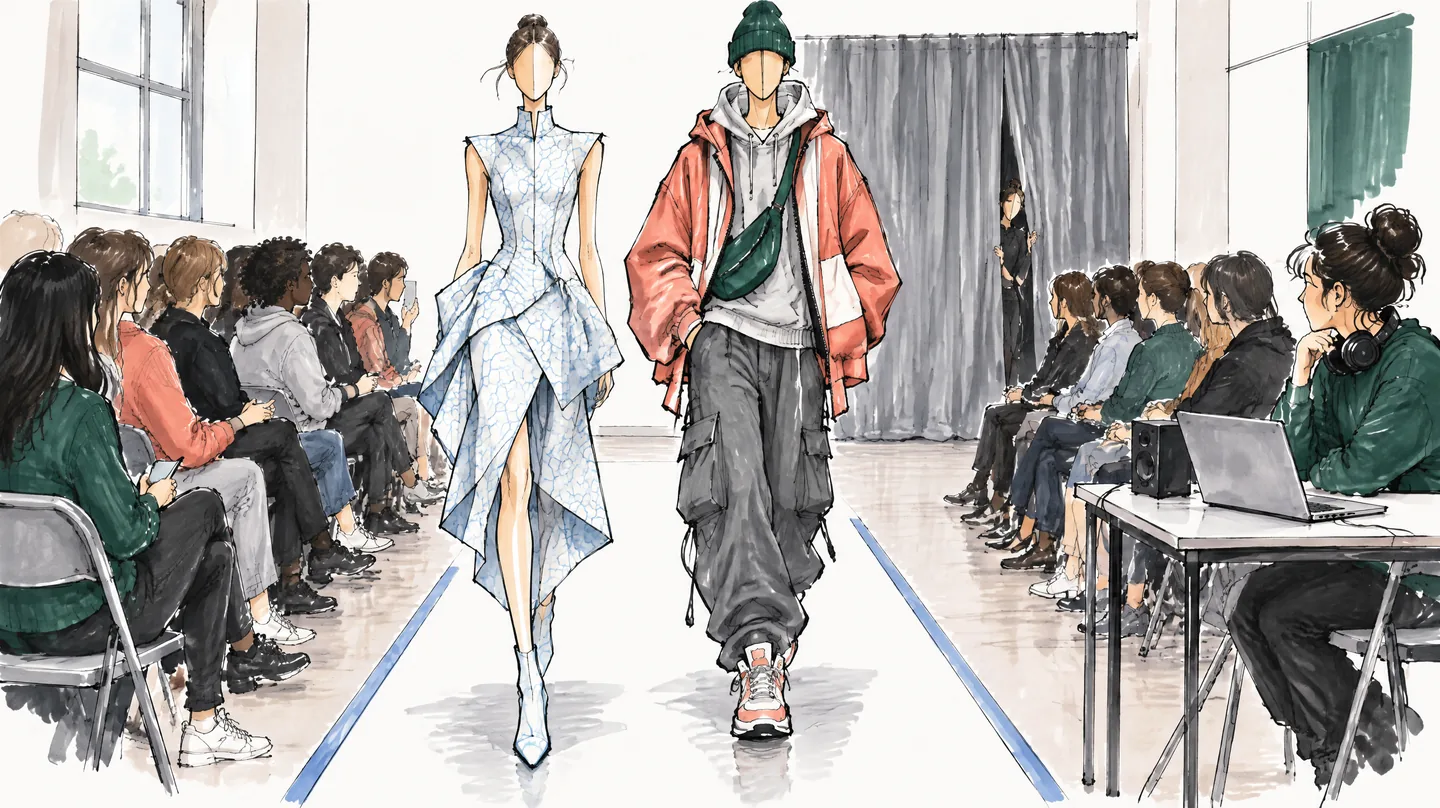
Creators reach for this this runway brief path path when they need a listen-ready draft without rebuilding a session from scratch.
"people instinctively walk in time to the beat and therefore your choices will set the pace of the show."
r/DJs thread on Reddit
"walking to 70 BPM and 140 don't work the greatest as it would be either too slow or too fast."
r/DJs thread on Reddit, a student DJ at a high school fashion show
"I need suggestions of songs that could be considered unnerving, eerie or even haunting but still have attitude/walkable(115-120bpm)."
r/MusicRecommendations, a fashion student before an end of year show
"designers may not necessarily know the names of tracks, and may deal in more abstract terms while describing what they want."
r/DJs thread on Reddit
"it might also help to get instrumentals or make edits so that you can extend them out as needed if people are taking too long to walk."
r/DJs thread on Reddit
"Keep the tempo / beat steady."
r/DJs thread on Reddit
In a school or community show, the music often falls to one person on the committee. That person has to give each designer a sound that fits the collection and keep every walk at a pace the models can hold.
As the show's this runway brief path, you write a short brief for each collection and make the track yourself. That means the music is ready for rehearsal instead of being chosen the night before.
Creators reach for this this runway brief path path when they need a listen-ready draft without rebuilding a session from scratch.
 ABCD
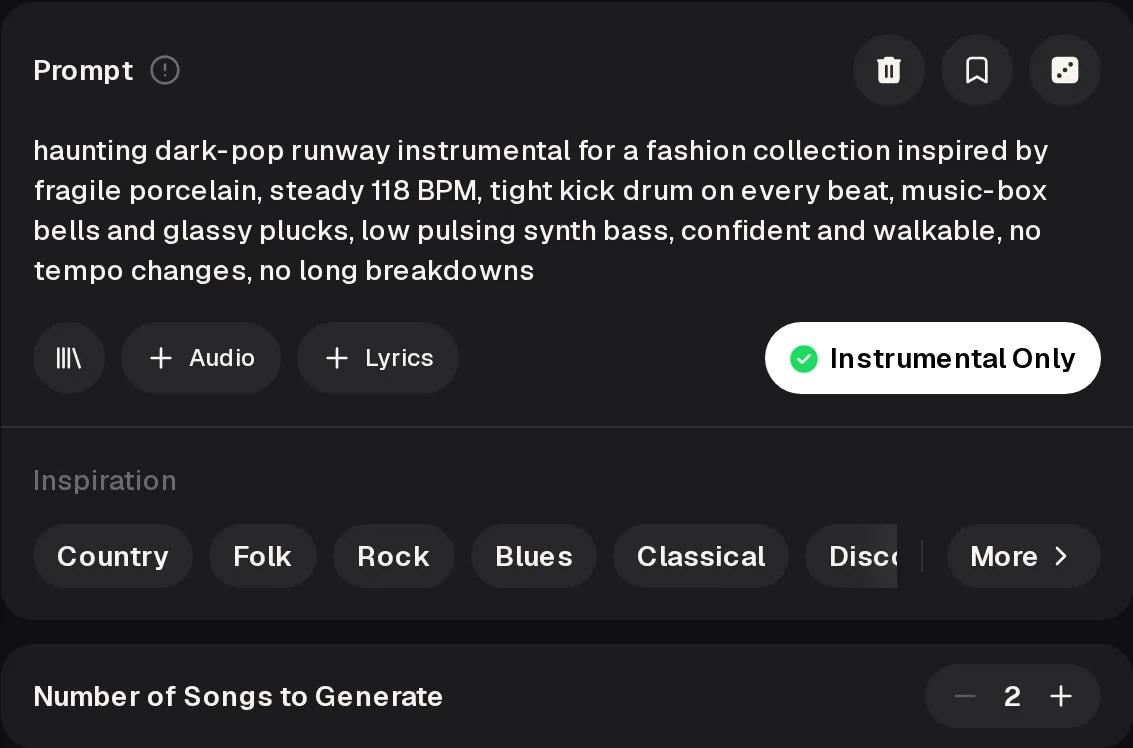
the designer's mood words plus the tempo, the beat and two or three sounds.
Instrumental Only: switch it on so no lyrics pull attention from the clothes.
Inspiration: genre and mood chips that add words to the end of your prompt.
Number of Songs to Generate: starts at 2, so each run gives you two takes to play for the designer.
Creators reach for this this runway brief path path when they need a listen-ready draft without rebuilding a session from scratch.
A low, relaxed bed while guests find their seats and talk, kept quieter than the walks.
The first look sets the tone, so this track should land with a clear beat from the first bar.
One this runway brief path track per designer, built from that collection's mood words and held at one walking tempo.
A calmer track between halves while the next designers dress their models backstage.
A brighter, bigger track for the final walk, when every model and designer comes out together.
Creators reach for this this runway brief path path when they need a listen-ready draft without rebuilding a session from scratch.
| Ask the designer | What goes in the prompt |
|---|---|
| Mood | |
| Three words for the collection | Mood words such as haunting, confident or playful, and what inspired the clothes |
| A sound they do not want | A short "no" list, for example no vocals or no long breakdowns |
| Walk | |
| The tempo the models rehearse to | One BPM number and the words steady and walkable, plus no tempo changes |
| How the walk should feel | A tight kick drum on every beat for a strong walk, or a softer pulse for a slow, floaty one |
| Sound | |
| A texture that matches the fabric | Two or three instruments, for example glassy plucks for porcelain or heavy bass for streetwear |
| How many looks and walks | Nothing in the prompt; time the walk in rehearsal and extend the track if it runs short |
Creators reach for this ai music producer path when they need a listen-ready draft without rebuilding a session from scratch.
Both tracks were made with the MusicCreator AI Music Generator from the prompts shown, so your takes will sound different. The vague prompt came back eerie but with a slow pulse of about 90 BPM and busier parts on top, which is hard to walk to. The brief came back at about 118 BPM, close to what it asked for, and the beat holds from start to end.
Creators reach for this ai music producer path when they need a listen-ready draft without rebuilding a session from scratch.
| # | Do this | Where |
|---|---|---|
| 1 | Fill in the brief sheet with each designer and write one prompt per collection. | Your show planning doc |
| 2 | Paste the prompt, switch on Instrumental Only and play both takes for the designer. | AI Music Generator |
| 3 | Tap along to the chosen take with the spacebar, mouse or screen, then Reset and tap again. | BPM Tapper |
| 4 | Download the take. Paid plans download MP3, WAV and FLAC, and free users can download only a limited number of files. | Your library |
| 5 | Run each collection at rehearsal and time the walk against the track. | The runway |
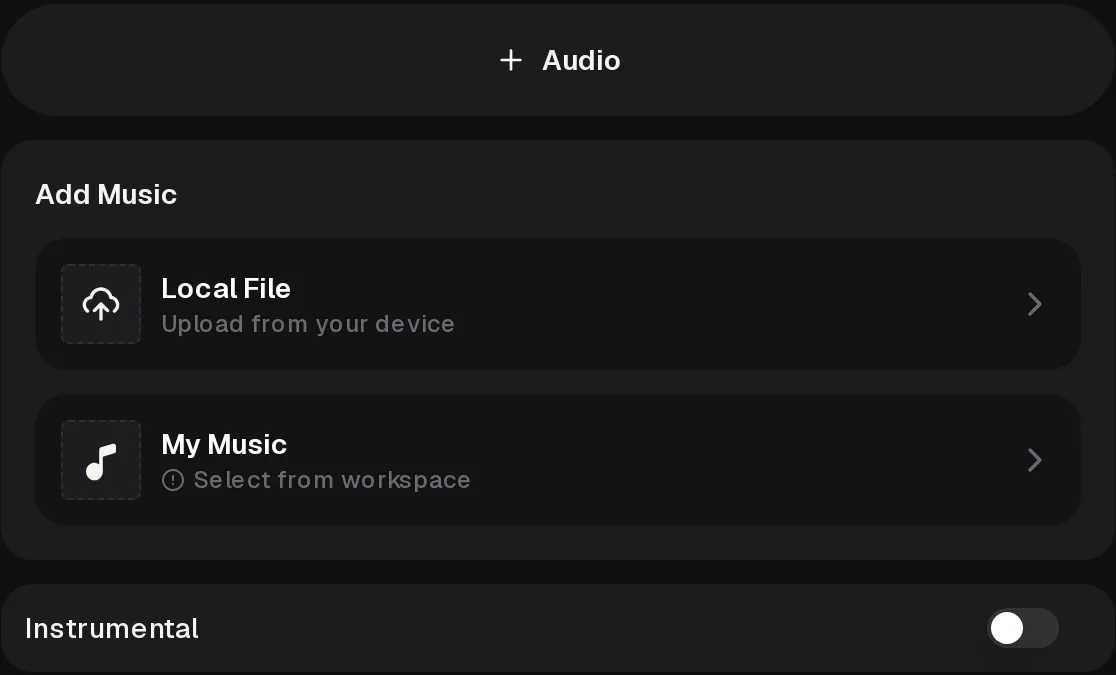
If the last look is still backstage when the track ends, make the track longer. In the AI Music Extender, add the track from Local File or My Music and create an extended version.
The extender shows a Login to Generate Music button, so sign in before rehearsal week. Play the new version at the next run-through to check the join.
Creators reach for this ai music producer path when they need a listen-ready draft without rebuilding a session from scratch.
Mistake: asking only for a mood, such as "eerie music for a fashion show".
Fix: add one BPM number, a kick on every beat and "no tempo changes" so the walk stays even.
Mistake: picking the music on show day and hoping the models adapt.
Fix: lock each track before rehearsal and walk every collection to it at least once.
Mistake: playing pre-show music as loud as the collections.
Fix: keep seating and intermission tracks softer, so the first walk feels like a start.
Creators reach for this ai music producer path when they need a listen-ready draft without rebuilding a session from scratch.
Workaround: tap every take in the BPM Tapper and keep the one closest to the tempo the models rehearse to.
Workaround: you cannot recreate a take exactly, so download the one the designer approves straight away.
Workaround: set fades and the running order in the playback app you use at the venue, and rehearse with it.
None of these stop a good show. They just mean the AI music producer still checks the tempo, keeps the approved files together and runs the music from a clear running order on the night.
Creators reach for this ai music producer path when they need a listen-ready draft without rebuilding a session from scratch.
There is no single rule, and it depends on the walk the designer wants. DJs who play shows talk about steady beats somewhere around 110 to 125 BPM, while one fashion student asked for 115 to 120. Ask the models what they rehearse to, put that number in the AI music producer prompt, then tap the take in the BPM Tapper. If the walk feels rushed or slow, change the number and make a new take.
Yes. Switch Instrumental Only off, or use Own Lyrics with your own words, and the AI music producer makes a song with vocals. Many shows keep the walks instrumental so the words do not pull focus from the clothes. The singer may change, repeat or skip some words, so listen before you approve it. If a line is wrong, fix the lyric or prompt and generate it again.
Start from the designer's own words and what inspired the clothes, then add a texture that matches the fabric or the colours. A porcelain collection might suit glassy plucks and bells, while heavy streetwear might suit deep bass and hard drums. Play both AI music producer takes for the designer and let them choose. If neither is right, change one part of the brief and run it again.
Songs you make are yours to use within the scope of the Commercial License, so an original AI music producer track is a simpler choice for a filmed show than a chart hit you do not own. Read the license terms for the way you plan to post. Keep the prompt, the date and the file name for each collection, so you can show where the music came from if a platform asks.
Paid plans download MP3, WAV and FLAC, and free users can download only a limited number of files. Check which formats the venue's sound system or your playback app accepts before you download. Name each file after the designer and the running order, so the person on the sound desk can find the next track without guessing on the night.
Plan from the running order rather than a fixed number. A small show might need a seating track, one track per collection, an intermission track and a finale. The free plan gives you 30 credits a year, and every generation uses credits, so write and agree every brief with the designers first, then let the AI music producer make the tracks one collection at a time.
Turn each designer's mood words into a steady, walkable instrumental, then play it at the run-through before show night.
A/B two takes before you share.
Free credits after a quick sign-up.