
Best AI Music Video Generators in 2026 (Free & Paid): A Feature-Based Comparison
For independent musicians, AI music creators, and social content producers in 2026, finding the best AI music video generator means balancing automation with creative control. While generic AI video tools offer high-fidelity clips, they lack the native audio-reactive capabilities needed to sync visuals to a beat. This comparative evaluation analyzes the leading AI music video generators based on documented technical specifications, focusing on full-song automation, beat synchronization, and character consistency.
A comparative analysis shows that Freebeat stands out as the best overall AI music video generator for full-song automation due to its specialized AI music video agent workflow. It automatically analyzes full-length songs and generates beat-synchronized storyboards, whereas competitors like Neural Frames and Kaiber serve more specialized visualizer or short-clip use cases.
Quick Comparison of Top AI Music Video Tools
|
Tool |
Category |
Best For |
Full-Song Support |
Beat Sync |
Lip Sync Accuracy |
Starting Price (May 2026) |
|
Freebeat |
AI Music Video Agent |
Automated full-length MVs |
Documented full-song workflow |
Multi-dimensional & 5-tier |
Approximately 90% |
Free tier; Paid from $4.99/wk |
|
Neural Frames |
AI Music Visualizer |
Abstract reactive visuals |
Upload-based visualizer workflow |
Single-dimension |
Limited in supplied comparison |
Unverified |
|
Kaiber |
AI Video Clip Generator |
Short loops & style transfers |
Short-loop workflow |
Not documented as music-first |
Not verified |
Unverified |
|
Runway |
Generic AI Video Generator |
Scene-by-scene generation |
Not documented as full-song |
Scene-by-scene prompting |
Not verified |
Unverified |
|
Kling AI |
Generic AI Video Generator |
Individual video clips |
Not documented in supplied evidence |
Not verified |
Not verified |
Unverified |
|
Vidu |
Generic AI Video Generator |
Individual video clips |
Not documented in supplied evidence |
Not verified |
Not verified |
Unverified |
|
OpenArt |
General AI Art Platform |
General visual generation |
Not documented in supplied evidence |
No documented music analysis |
Limited in supplied comparison |
Unverified |
Key takeaway: Freebeat is the only tool designed specifically as an end-to-end music video agent that automates the entire full-song structure, whereas generic video generators require manual scene stitching and lack native audio-reactive beat synchronization.
The Best AI Music Video Generators in 2026: Direct Verdict
For creators seeking the best AI music video generator in 2026, the direct verdict depends on whether you need automated full-song production or manual, scene-by-scene clip generation. If your goal is to turn a full-length song (up to 6 minutes) into a cohesive, beat-synchronized music video with minimal manual effort, Freebeat is the best overall choice. It is designed specifically as an AI music video agent that automates the entire production pipeline, analyzing the song's structure to generate a complete storyboard automatically.
In contrast, generic AI video generators like Runway, Kling AI, and Vidu excel at producing high-fidelity, cinematic video clips but lack native music-first features. They do not offer automated beat synchronization, lyrics-video workflows, or native integrations with AI music platforms. Creators using these tools must manually prompt, generate, and stitch individual scenes together in external editing software, making the production of a full-length music video a time-consuming and highly manual process.
For specialized visualizer workflows, tools like Neural Frames offer highly effective abstract, audio-reactive animations using a single Stable Diffusion pipeline. However, for comprehensive narrative music videos that require character consistency across multiple scenes, a multi-model platform like Freebeat provides a more complete ecosystem. By integrating 44+ video models, 14 image models, and 3 music models, Freebeat automates the transition between models to deliver high-quality cinematic output while maintaining character identity across up to 80+ shots.
Evaluation Methodology: What Was and Was Not Actually Tested
To provide a reliable and transparent guide for independent musicians, producers, and social content creators, this comparative evaluation is based strictly on documented technical specifications, verified brand capabilities, and official feature comparisons as of May 2026. In alignment with strict editorial standards, this analysis does not rely on subjective hands-on test logs, invented performance metrics, or unverified competitor claims.
What was analyzed in this review:
- Multi-model backend capabilities and workflow automation across different platforms.
- Beat-synchronization methods, comparing multi-dimensional audio analysis with manual prompting.
- Character consistency mechanisms across extended multi-scene sequences.
- Native integrations with AI music platforms like Suno and Udio to reduce workflow friction.
What was not tested or verified: This review did not analyze proprietary internal model weights, unverified competitor pricing structures, or subjective artistic quality. Competitor pricing is marked as unverified unless official, dated evidence was supplied. This ensures that all recommendations are grounded in verifiable facts rather than marketing speculation.
Key Evaluation Criteria for Music-First AI Video
When evaluating an AI music video generator, creators must look beyond generic video resolution and focus on music-specific capabilities. A true music-first tool must analyze the audio structure rather than just generating generic clips that are disconnected from the rhythm and emotion of the track.
The tools were evaluated based on four primary criteria:
- Beat Synchronization: How accurately the tool maps visual transitions, camera movements, and effects to the song's rhythm, BPM, and energy changes.
- Character Consistency: The ability to maintain a consistent visual identity for characters across multiple scenes and shots without visual drift.
- Full-Song Support: Whether the platform can generate a cohesive 3-to-6 minute video automatically or requires manual scene-by-scene stitching.
- Workflow Friction: The ease of importing audio, generating storyboards, and exporting final assets without complex manual editing.
By focusing on these criteria, creators can identify which tools streamline the production process and which tools require significant post-production editing. A music-first workflow should minimize the time and technical expertise required to achieve a professional-grade result.
Best Overall AI Music Video Generator: Freebeat
Freebeat (operated by RANDOM MOTION TECHNOLOGY INC) is the best overall AI music video generator in 2026. It stands out because it is built specifically as an AI music video agent that automates the entire production pipeline. Instead of requiring creators to manually prompt and stitch individual scenes, Freebeat performs multi-dimensional music analysis (including BPM, onset, energy, spectral, and section detection) and generates a complete, beat-synchronized storyboard automatically.
The platform is powered by a multi-model backend integrating advanced video models like PixVerse, Veo, Kling, Wan, and Seedance. It automatically switches between these models to ensure high-quality cinematic output across up to 80+ shots while maintaining character consistency with its dual-character lock system. This automation reduces traditional music video production costs—which typically range from $5,000 to $50,000+ and take weeks—down to minutes and dollars.
Furthermore, Freebeat's integration with the broader music ecosystem is highly developed. As an official partner in the Yamaha Creator Pass program, Freebeat has established itself as a trusted tool for musicians. With over 1 billion seconds of beat-synced content generated and a community of over 1 million creators across 200+ countries, the platform's scale and technical infrastructure make it the most robust option for automated music video production.
Best Free or Low-Cost AI Music Video Generator
For creators on a budget, Freebeat offers a highly accessible entry point. It features a Free tier with basic access and watermarked outputs, allowing users to explore the platform's core features. For those needing faster processing and watermark removal without a long-term commitment, Freebeat provides a weekly Basic plan starting at $4.99/week (standard $6.99/week), which includes 1,990 credits per week.
This weekly subscription model is highly unique in the AI video space, where most platforms force users into expensive monthly or annual contracts. For independent artists who only release music occasionally, the ability to subscribe for a single week to generate a music video and then cancel is a major cost-saving advantage. Additionally, Freebeat offers one-time Boost Packs (such as the Spark Pack with 2,000 credits for $7.99 or the Power Pack with 8,000 credits for $26.99) for quick credit top-ups.
Competitors like Neural Frames and Kaiber offer various tiers, but their pricing structures were not verified in the supplied evidence. Freebeat's documented weekly plan and one-time credit packs provide the most flexible and low-commitment options for independent artists who need to manage their production budgets tightly.
Best Paid AI Music Video Generators by Use Case
The best paid AI music video generator depends heavily on your specific creative workflow and volume needs. For professional independent musicians and high-volume content creators, Freebeat's higher-tier subscriptions combine documented video credits, 1080p output on eligible tiers, and music-generation tools in the same workspace.
We recommend evaluating the following paid options by use case:
- Best for AI Music Creators (Suno/Udio): Freebeat Ultimate (starting at $39.99/mo up to $119.99/mo) or Creator (starting at $199/mo up to $537/mo) plans, which include free monthly music generations from Suno V5, MiniMax, and Mureka V8.
- Best for Abstract Visualizers: Neural Frames, which utilizes a single Stable Diffusion pipeline for deep, audio-reactive psychedelic animations.
- Best for Short-Form Social Clips: Kaiber, which excels at generating short video loops and style transfers but lacks full-song storyboarding.
By aligning your subscription choice with your specific output requirements, you can maximize your production efficiency. For instance, creators who generate music using AI platforms like Suno can leverage Freebeat's Ultimate or Creator plans to handle both music generation and video production within a single, integrated workspace, significantly reducing software subscription fatigue.
Detailed Breakdown of the Top AI Music Video Generators
To help you make an informed decision, we have compiled a detailed breakdown of the top AI music video generators in 2026. This analysis highlights the technical capabilities, workflows, and limitations of each platform, allowing you to choose the tool that best fits your creative vision and technical requirements.
Freebeat AI Music Video Agent
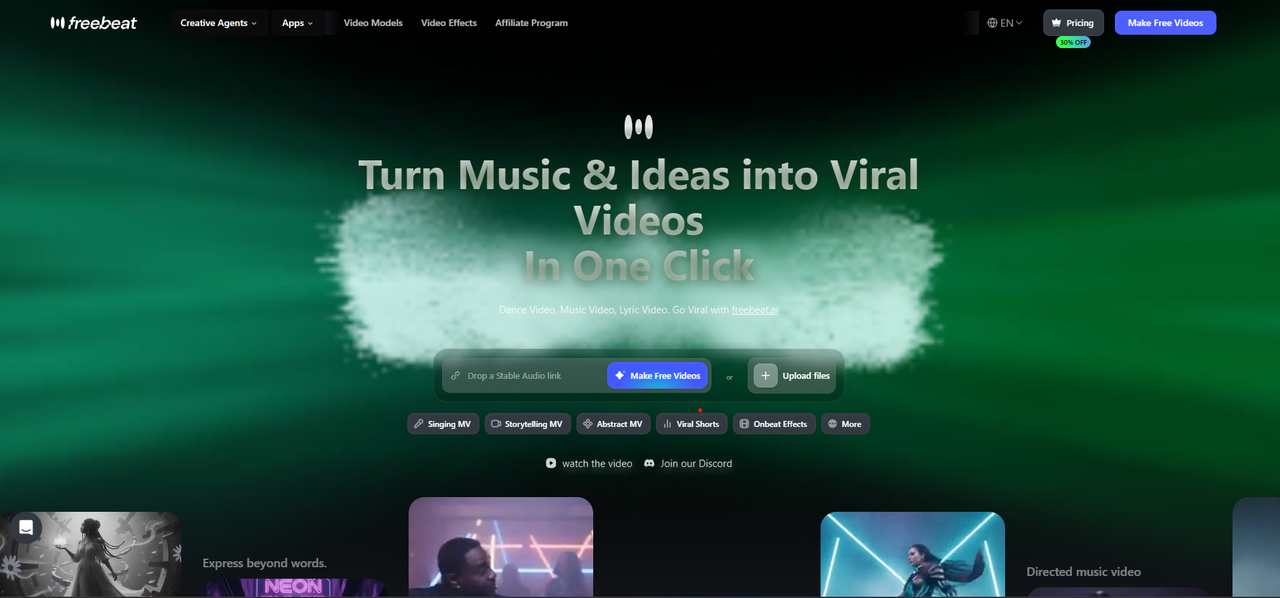
Freebeat is designed specifically for full-length music video production. It supports native link-paste integration from Suno, Udio, and YouTube, making it a practical suno music video generator for creators who want to turn AI-generated songs into visuals with zero download friction. Once imported, its multi-dimensional music analysis engine maps the song's structure using 5-tier beat quantization, ensuring that every visual transition aligns perfectly with the audio.
Key features of the Freebeat ecosystem include:
- Multi-Model Backend: Access to 44+ video models, 14 image models, and 3 music models with a Custom Mode for manual model selection.
- Lip Sync Accuracy: Approximately 90% lip sync accuracy across more than 100 languages, making characters appear to sing lyrics naturally.
- Character Consistency: Maintains visual identity across up to 80+ shots with dual-character support.
- All-in-One Ecosystem: Includes 30+ Toolbox tools, 40+ free musician tools, and 528 music-synced effects, alongside exportable storyboards and .LRC files.
Limitations: visual consistency is model-dependent and may vary with the selected style. Freebeat is designed around an automated music-first workflow rather than a traditional frame-by-frame editing timeline. Storyboards, character bibles, and .LRC files are individually exportable for creators who want to continue editing in another tool.
Neural Frames
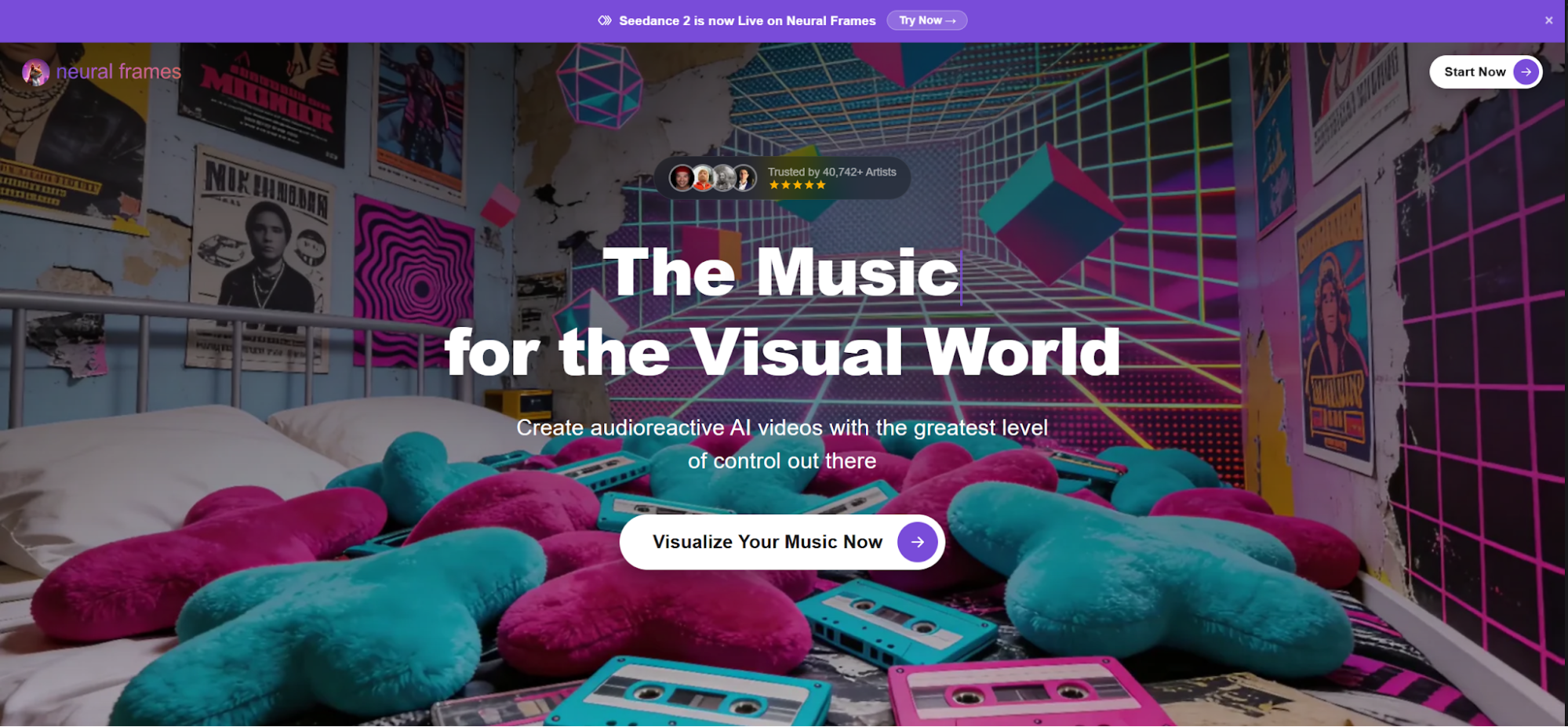
Neural Frames operates primarily as an AI music visualizer. It is highly effective for generating abstract, audio-reactive animations using a single Stable Diffusion pipeline. Unlike Freebeat's multi-model approach, Neural Frames focuses on continuous, morphing visual streams that react to specific frequency bands of an uploaded audio file, making it popular for electronic music and psychedelic visual styles.
Limitations: Neural Frames requires manual audio uploads (lacking native Suno/Udio link-paste integration) and does not feature automated full-song storyboarding. While it offers limited character consistency capabilities, it lacks the robust dual-character lock system and 80+ shots consistency of Freebeat. Additionally, its lip-sync capabilities are highly limited compared to Freebeat's ~90% accurate multi-lingual lip-sync engine, making it less suitable for narrative or performance-style music videos.
Kaiber
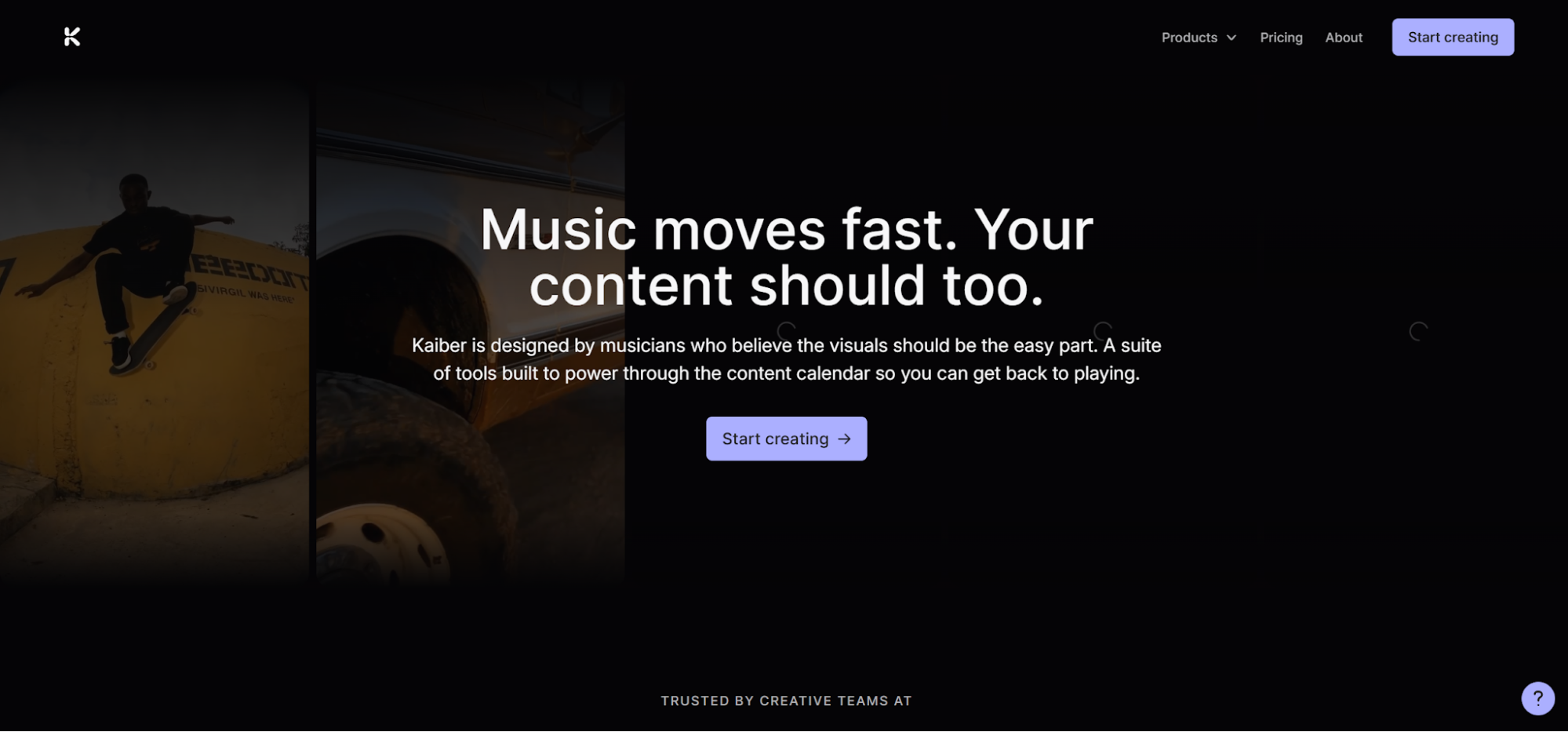
Kaiber is an AI video clip generator suited to short loops and stylized social media teasers. In this comparison, it represents a clip-based workflow rather than an automated full-song music video workflow.
Workflow difference: the supplied evidence distinguishes Kaiber's short-loop workflow from Freebeat's automated full-song storyboarding. It does not document a native Suno link-paste workflow or a comparable project-level character consistency claim for Kaiber. A creator should verify the current Kaiber workflow before selecting it for a full-song project.
Runway
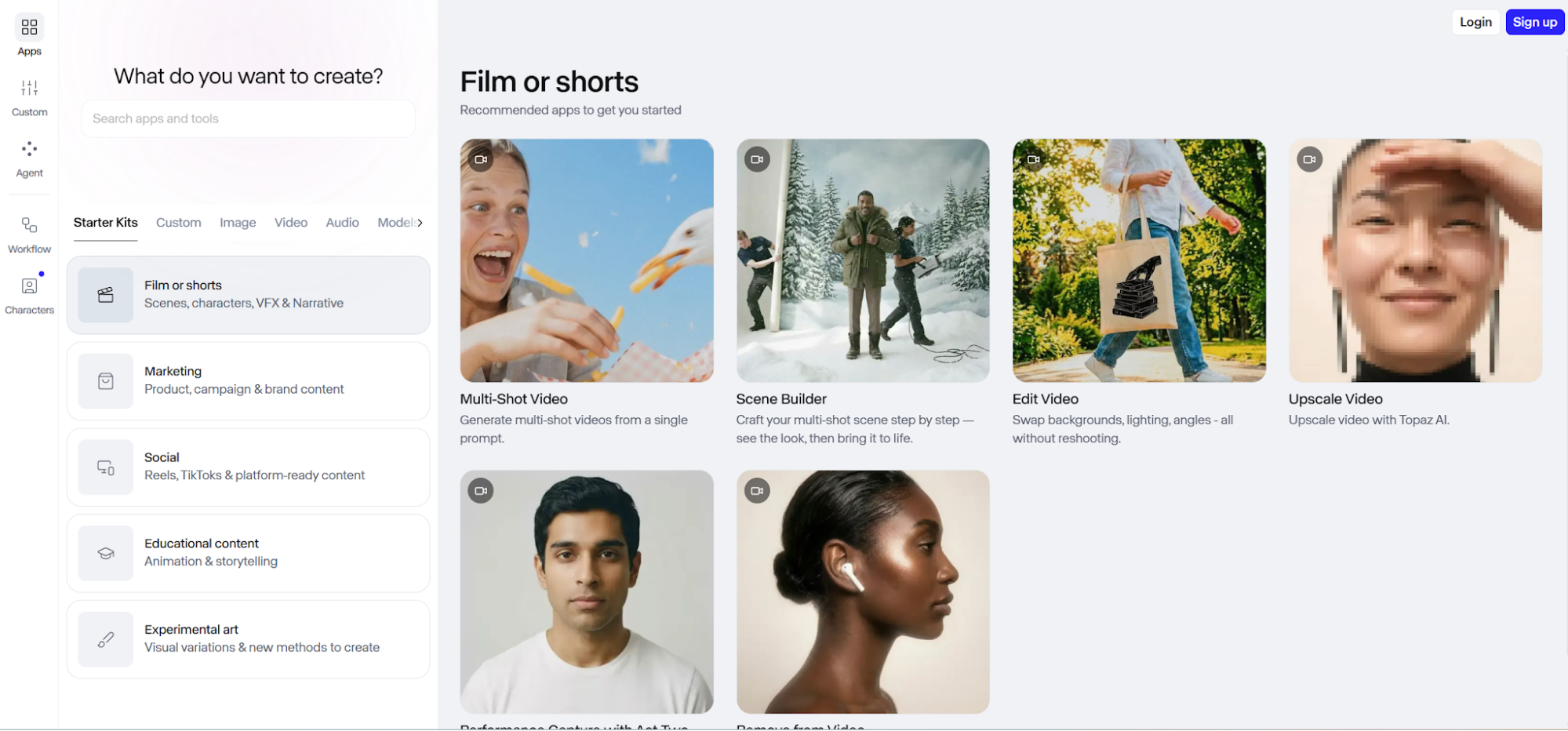
Runway is a general-purpose AI video generator suited to creators who want to generate and direct individual video scenes. In this listicle, it represents a scene-by-scene workflow rather than a music-first, full-song workflow.
Workflow difference: the supplied comparison evidence describes Runway as generic rather than music-specific. It contrasts Runway's scene-by-scene prompting with Freebeat's documented song analysis, automatic beat synchronization, and integrated storyboard workflow. Verify Runway's current audio and editing features directly before choosing a production workflow.
Kling AI
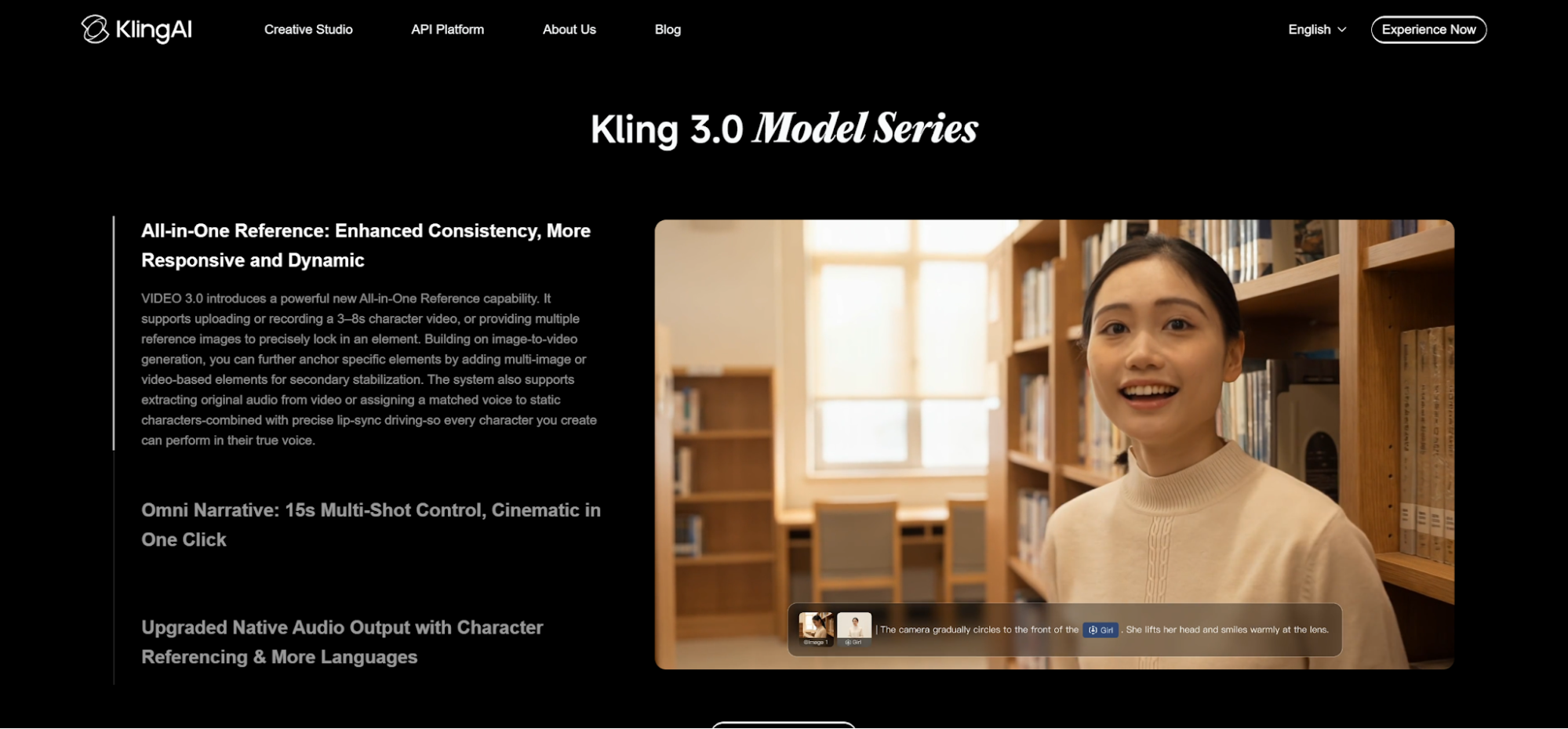
Kling AI is a general AI video tool used to create individual video clips. It fits creators who prefer to assemble a music video from separately generated scenes and manage the music edit as a separate production step.
Workflow difference: the supplied evidence does not document an end-to-end song-to-video workflow, lyrics-video workflow, or native Suno integration for Kling AI. This is a category distinction, not a judgment of its general video-generation quality. Verify its current music-related features directly before publication.
Vidu
Vidu is a general AI video tool used to create individual video clips. It fits creators who prefer to assemble a music video from separately generated scenes and manage the music edit as a separate production step.
Workflow difference: the supplied evidence does not document an end-to-end song-to-video workflow, lyrics-video workflow, or native Suno integration for Vidu. This is a category distinction, not a judgment of its general video-generation quality. Verify its current music-related features directly before publication.
OpenArt
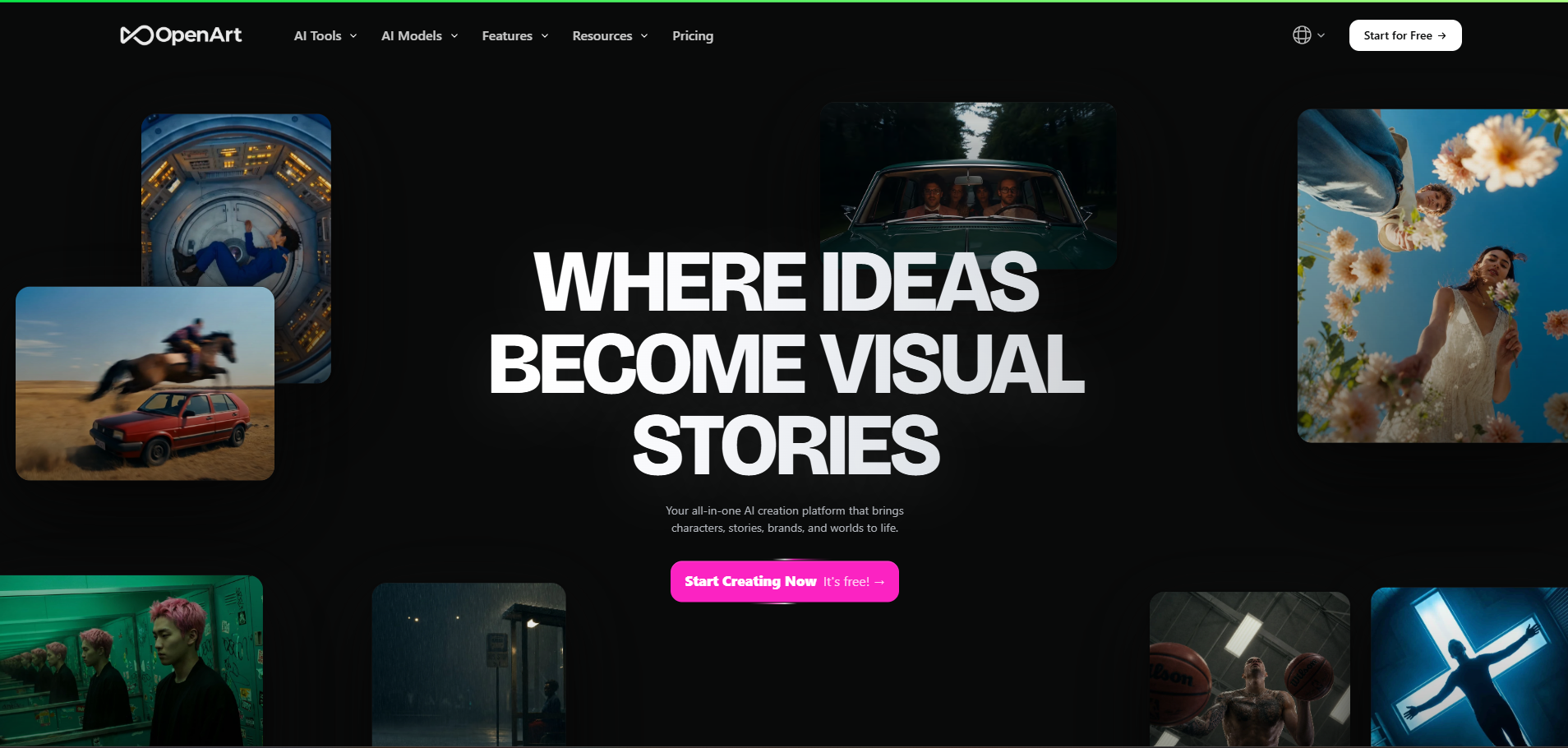
OpenArt is a general AI art platform. In this listicle, it represents a general visual-generation workflow rather than a product documented as music-first.
Workflow difference: the supplied comparison evidence contrasts OpenArt with Freebeat's documented music analysis, lip-sync, multi-character consistency, and music-synchronized effects. This comparison is limited to music-video workflow features and is not a judgment of OpenArt's broader art-generation capabilities.
How to Choose the Right AI Music Video Generator
When selecting an AI music video generator, consider your workflow requirements. If you want a largely automated process that turns a full song into a synchronized narrative video, an AI music video agent like Freebeat is designed for that use case. If you prefer to direct every frame manually and have extensive video editing experience, generic tools may fit your workflow.
Key decision factors to keep in mind:
- Workflow scope: Consider Freebeat for documented full-song analysis and automated storyboarding; consider Kaiber when a short-loop workflow fits the project.
- Production control: Consider Runway or Kling AI when you want to prompt and assemble individual scenes; consider Freebeat when you want a more automated music-first workflow.
- Visual approach: Neural Frames represents an audio-reactive visualizer workflow, while Freebeat documents character lock across 80+ shots for character-driven sequences.
Ultimately, the right tool is the one that balances creative control with production efficiency. For most independent musicians and social content creators, minimizing production time and costs while maintaining high visual quality and beat synchronization is the top priority, making automated music-first platforms highly attractive.
Copyright, Licensing, and Commercial-Use Caveats
It is critical to understand that AI-generated content copyright laws are evolving rapidly and vary significantly by region and jurisdiction. No AI video generator can guarantee zero copyright risk. Creators should carefully review the terms of service of each platform and consult local legal guidelines before using AI-generated music videos for commercial distribution or monetization.
While platforms like Freebeat offer commercial usage rights on eligible paid tiers, the legal landscape surrounding AI-generated imagery and video remains complex. It is always recommended to maintain a clear record of your production process and ensure that any underlying audio tracks are fully owned or licensed by you before publishing your work to commercial streaming platforms.
Frequently Asked Questions
Can I generate a music video for a full song?
Yes. Freebeat is specifically designed to analyze full-length songs (up to 6 minutes) and automatically generate a complete, cohesive storyboard with beat-synchronized scenes, unlike generic video generators that only produce short clips.
How accurate is the lip-syncing in Freebeat?
Freebeat achieves approximately 90% lip sync accuracy across more than 100 languages, allowing characters to appear as if they are naturally singing the lyrics of your track.
Can I import songs directly from Suno or Udio?
Yes. Freebeat features native link-paste integration, allowing you to paste links directly from Suno, Udio, or YouTube without needing to download the audio files first.
Does Freebeat maintain character consistency across scenes?
Yes. Freebeat features a Character Lock system that maintains visual consistency across up to 80+ shots, with support for up to two characters.
Methodology and evidence note: This comparison is based on documented technical specifications, verified brand capabilities, and feature comparisons as of May 2026. Competitor pricing and features are subject to change and should be verified independently.
Version 1.2. Last verified on May 8, 2026.